
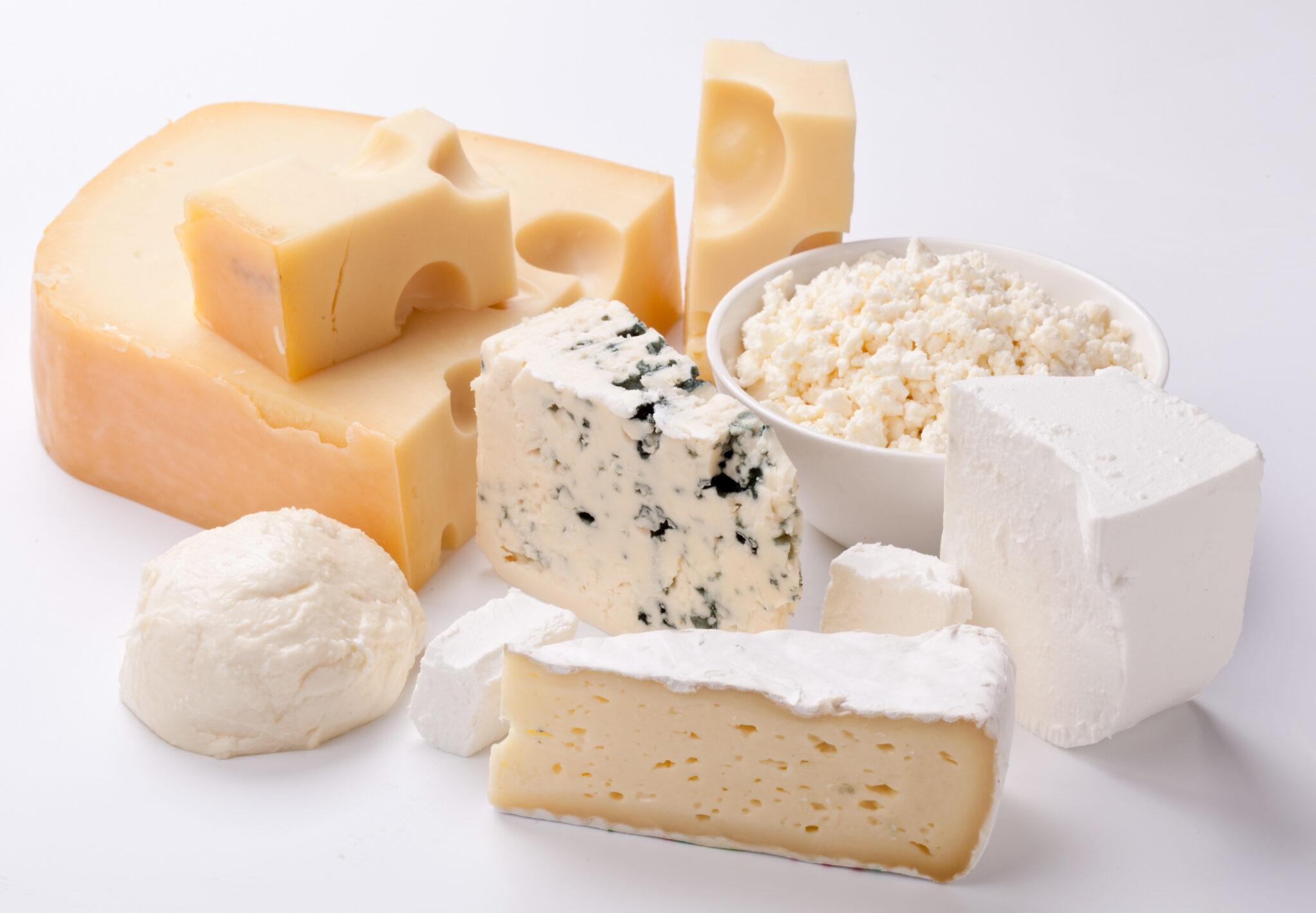

Not always. Some cheese is made using rennet, an enzyme traditionally taken from the stomach lining of slaughtered calves. Most supermarket cheese now uses a microbial or fermentation-produced alternative — but several famous cheeses are required by their protected designation to use the animal-derived version.
What rennet is
Rennet is a set of enzymes that coagulate milk, separating curds from whey. It’s the step that turns milk into cheese.
Traditionally it came from the abomasum — the fourth stomach compartment — of young calves, which produce it to digest their mother’s milk. Extracting it requires slaughtering the animal.
Three alternatives are now in wide use:
Fermentation-produced chymosin (FPC). Genetically modified microorganisms produce an enzyme identical to calf chymosin. This is the dominant option in commercial cheesemaking today, and it’s not animal-derived.
Microbial rennet. From moulds and fungi. Widely used, occasionally produces a slightly bitter note in aged cheese.
Plant-based coagulants. Thistle, nettle, fig. Traditional in a few regional cheeses, rare commercially.
The cheeses that can’t be vegetarian
This is what surprises people most.
Several European cheeses hold protected designation status, and their specifications require animal rennet. A producer using anything else can’t legally call the cheese by that name.
The most commonly encountered:
- Parmigiano-Reggiano
- Grana Padano
- Pecorino Romano
- Gorgonzola
- Manchego
- Several traditional Gruyère and alpine styles
So a genuine Parmigiano-Reggiano is never vegetarian. Domestically produced “parmesan” — which isn’t the protected name — often is, because it’s under no such obligation.
That distinction matters if you’re checking a cheese board or a pasta dish. It’s also why “parmesan” on a Canadian ingredient list and “Parmigiano-Reggiano” on an Italian import are genuinely different answers.
How to read the label
Canadian labels use several terms, and they’re not equally informative:
- “Microbial enzyme” or “microbial rennet” — not animal-derived
- “Vegetarian rennet” — not animal-derived
- “Rennet” with no qualifier — ambiguous, could be either
- “Enzymes” with no qualifier — ambiguous, and very common
- “Animal rennet” — self-explanatory, rarely stated
The unqualified terms are the problem. “Enzymes” appears on a great many cheeses and tells you nothing.
Is vegan cheese vegetarian?
Usually, but check. Some plant-based cheeses contain casein — a milk protein — used for stretch and melt. A casein-containing cheese is vegetarian but not vegan, despite often being marketed alongside vegan products.
Plant-based is not the same claim as vegan.
Other things in cheese worth knowing
Lipase. An enzyme used in some Italian-style cheeses for flavour. Often animal-derived.
Colouring. Annatto is plant-derived and standard. Some cheeses use other colourings worth a glance.
Lysozyme. Used in some hard cheeses to prevent spoilage. Derived from egg white — vegetarian, not vegan.
What to do
Check for “microbial” or “vegetarian” on the panel. If it just says “enzymes,” you don’t know.
Assume PDO European cheeses use animal rennet unless stated otherwise.
Ask at the counter. Cheesemongers usually know, and the answer varies by producer even within the same style.
Look for a certification mark on packaged products, which resolves the question without you having to interpret the panel.
Rennet is one of several ingredients where the label leaves the question open. Our prohibited ingredients list sets out what we screen for, including how our vegetarian designation treats animal-derived enzymes.



Leave a Reply