

Plant protein powders are usually vegan, but not automatically. The protein base is the easy part — the additions are where animal-derived ingredients turn up, often in products marketed as plant-based.
The obvious ones
Whey, whey isolate, whey concentrate, casein, micellar casein. All milk-derived. Not vegan, though vegetarian.
Collagen. From animal connective tissue — bovine, porcine, or marine. There is no plant collagen. Products advertising “vegan collagen” are generally offering ingredients intended to support your body’s own collagen production, not collagen itself.
Egg white protein. Vegetarian, not vegan.
Bone broth protein. Self-explanatory.
The ones people miss
This is where plant-based products go wrong.
BCAAs and individual amino acids. Branched-chain amino acids are frequently produced from animal-derived material, including duck feathers and other keratin sources. Fermentation-derived and synthetic versions are widely available — many brands advertise “fermented BCAAs” specifically because of this — but a plain “BCAA” listing doesn’t tell you which.
L-cysteine and L-leucine carry the same question when listed individually.
Vitamin D3. Most commonly derived from lanolin, which comes from wool. Added to a great many protein blends for marketing reasons. Lichen-derived D3 is the vegan alternative, and brands using it usually say so. D2 is plant-derived.
Glucosamine. Usually from shellfish. Fermentation-derived versions exist.
Chondroitin. Typically bovine cartilage.
Omega-3 / DHA / EPA. Fish oil or algal. Algae is where fish get it in the first place, so algal supplements skip a step rather than substituting something inferior. “Marine source” with no further detail usually means fish.
Creatine. Synthetic in virtually all commercial production, and vegan. Worth including because it’s a common worry that’s usually unfounded.
The quiet ones
Magnesium stearate and stearic acid. Flow agents in powders and tablets. Plant- or animal-derived, with an identical name.
Glycerine. In liquid and bar formulations.
Natural flavour. A legal category, not a sourcing statement. The flavour carrier may be glycerine or, occasionally, a dairy derivative.
Lactose. Still used as a filler in some blends.
Capsule shells, if your supplement is encapsulated. Standard two-piece capsules and almost all softgels are gelatin-based unless specified as HPMC or “vegetarian capsule.”
Carmine or shellac on coated tablets.
Probiotic and enzyme carriers. Some strains are cultured on dairy substrates.
What “plant-based protein” actually guarantees
Only that the protein itself is plant-derived — pea, rice, hemp, soy, pumpkin.
It says nothing about the vitamin blend, the amino acid additions, the flow agents, or the flavour system. A pea protein powder with lanolin-derived D3 and non-fermented BCAAs is plant-based and not vegan.
What solving it looks like
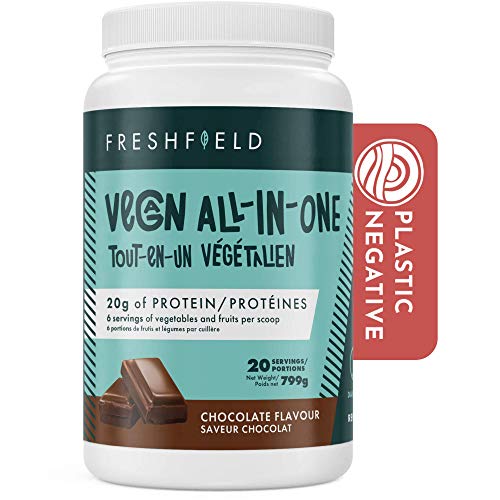
Freshfield, a British Columbia brand we certify, is a useful illustration — mostly because of what isn’t in it.
Their unflavoured protein is a single ingredient: barley rice protein, upcycled from brewer’s spent grain. The vanilla adds organic cane sugar, salt, natural flavours and monk fruit concentrate. They state no gums or fillers.
Look at that against the list above and most of the questions simply don’t arise. No vitamin premix to trace. No flow agent — which means no stearate sourcing question. No gums.
The BCAA point is the interesting one. Freshfield’s product carries BCAAs and glutamine because they occur in the protein itself, not because isolated amino acids were added. That sidesteps the keratin-sourcing question entirely — there’s no separate BCAA ingredient to trace, because there’s no separate BCAA ingredient.
The one item that does need verifying is “natural flavours,” since that’s a legal category rather than a sourcing statement and the carrier behind it could be anything. That’s precisely the kind of thing certification exists to resolve — and on a certified product, it has been.
Their omega-3 line makes the same point differently: it’s algae-derived rather than fish oil, which removes a sourcing question at the formulation stage rather than resolving it later with a supplier letter.
None of this is the only valid route. Plenty of brands certify with long, complex ingredient lists. But it illustrates the general principle — the cheapest time to settle a sourcing question is before the formulation is locked.
How to check
Read past the protein source. The first ingredient is rarely the issue.
Look for “fermented BCAAs” or a stated amino acid source.
Check the D source — D2, lichen-derived D3, or unspecified.
Check the capsule if it’s encapsulated.
Look for a vegan certification mark. It covers the flow agents, carriers and vitamin sources that a label can’t resolve.
Is whey vegetarian?
Yes. Whey is a dairy by-product of cheesemaking, so it fits standard vegetarian definitions including ours — though if the cheese was made with animal rennet, some vegetarians would exclude it on that basis. Whey from microbial-rennet cheese avoids the question.
VegeCert is a non-profit certification program for vegan and vegetarian food, supplement and personal care products. Our prohibited ingredients list sets out exactly what each mark permits.




Leave a Reply