
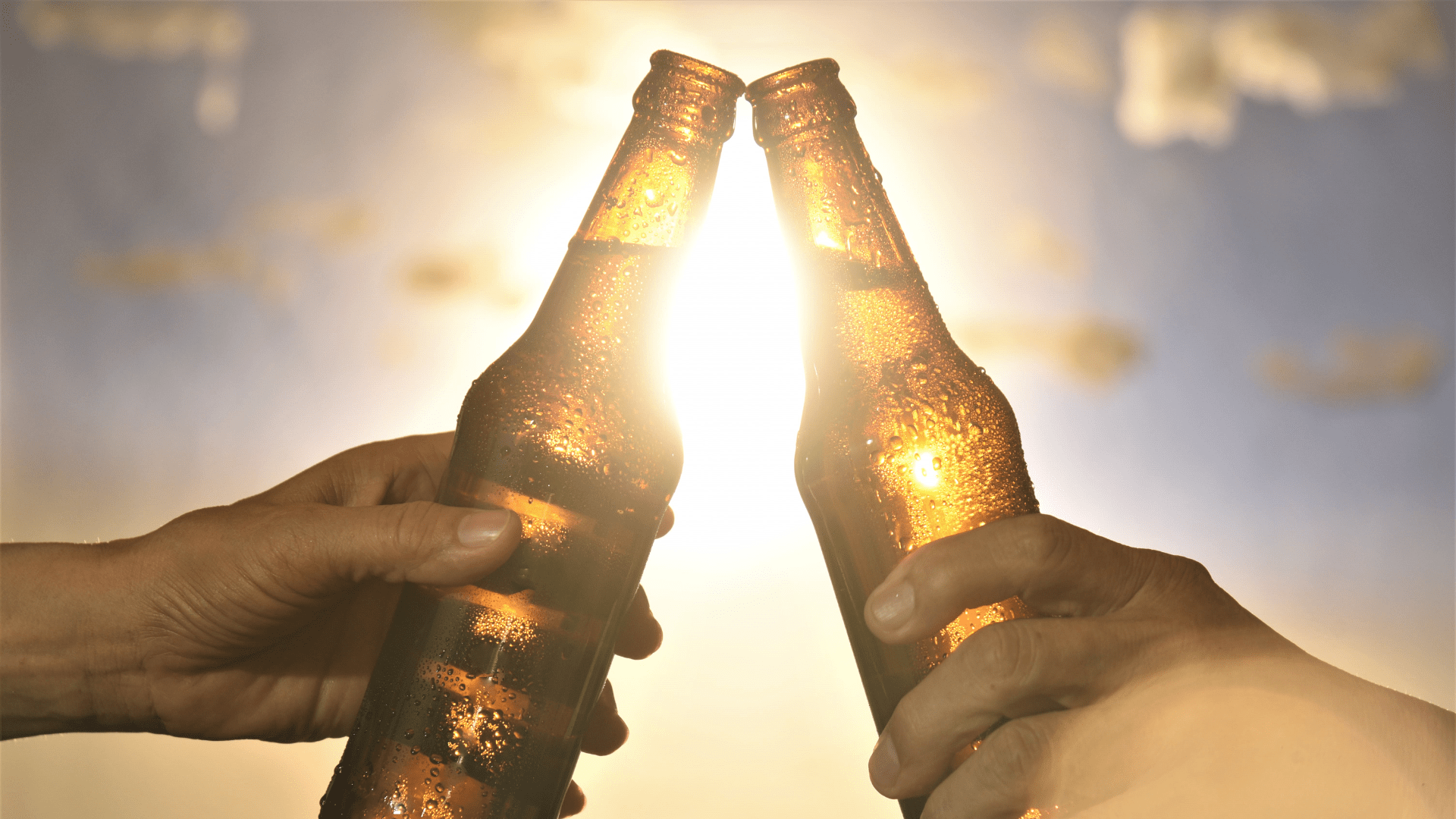

Usually, but not always. Beer contains no animal ingredients by definition — water, malt, hops, yeast. The issue is fining agents used to clarify it, including isinglass, which comes from fish swim bladders. And in Canada, beer isn’t required to carry an ingredient list at all.
The labelling problem
Start here, because it changes everything about how you’d check.
Alcoholic beverages in Canada are largely exempt from the ingredient labelling requirements that apply to food. Allergens must be declared, but a full ingredient list generally isn’t required.
So with beer you’re not reading a panel carefully and missing something. There’s often no panel to read.
Even where ingredients are listed, fining agents wouldn’t appear — they’re removed before packaging and treated as processing aids rather than ingredients.
What fining agents do
Fresh beer is cloudy. Proteins and yeast remain suspended, and most commercial beer is clarified before packaging.
Fining agents bind to those particles and drag them out of suspension. Several traditional ones are animal-derived:
Isinglass. From the swim bladders of fish. Traditional in British cask ale and the one most associated with beer.
Gelatin. From animal collagen. Used by some smaller producers.
Chitosan. Usually from shellfish, though fungal versions exist.
The plant and mineral alternatives are well established: Irish moss and carrageenan from seaweed, silica gel, PVPP, bentonite clay. Many brewers also skip fining entirely and use filtration, centrifugation, or simply time.
Which beers are most likely to be vegan
Most large-scale commercial lager. Filtration and centrifugation are standard at scale, and many large producers have moved away from isinglass.
Unfiltered and hazy styles. If cloudiness is the point, it wasn’t fined out.
Beers from breweries that state it. An increasing number label voluntarily or publish the information.
Which need checking
Cask and real ale. Isinglass remains common in traditional cask conditioning, where fining happens in the cask itself.
Some British and Irish imports, for the same reason.
Small-producer beers where practice varies and isn’t published.
Animal ingredients that are actually in the beer
Separately from fining, some styles contain animal-derived ingredients as ingredients:
Lactose. Milk sugar, used in milk stouts, sweet stouts, and many modern pastry stouts and hazy styles. Not vegan.
Honey. In honey beers and some braggots.
Whey or milk powder in some dessert-style beers.
Oyster stout. Sometimes made with actual oysters. Sometimes just named for them.
These would be declared as allergens where applicable, so a milk stout will generally say it contains milk.
How to check
Barnivore is a long-running community database of vegan beer, wine and spirits. It’s crowd-sourced rather than certified, so accuracy varies, but it’s the most comprehensive resource available and frequently cites direct responses from producers.
Ask the brewery. Small breweries answer quickly and usually know immediately.
Look for a certification mark where one exists. This is a category where a mark does real work, because there’s no label to read as an alternative. A VegeCert mark means the fining agents, filtration media and processing aids have all been verified — not just the ingredients.
Is wine vegan?
Same principle, different agents. Wine is commonly fined with egg albumin, casein from milk, gelatin, or isinglass. Bentonite clay and pea protein are the usual plant-based alternatives.
Wine carries the same labelling exemption, so the same difficulty applies.
Are spirits vegan?
Usually. Most distilled spirits involve no fining, and distillation removes most of what would be a concern. Exceptions are cream liqueurs, some honey-based spirits, and a few products using animal-derived filtration or flavouring.
Fining agents are one of the clearest examples of an animal-derived material that never reaches a label. VegeCert is a non-profit certification program for vegan and vegetarian products — see our prohibited ingredients list for everything we screen for, or read more about the ingredients that never make it onto your label.


Leave a Reply