
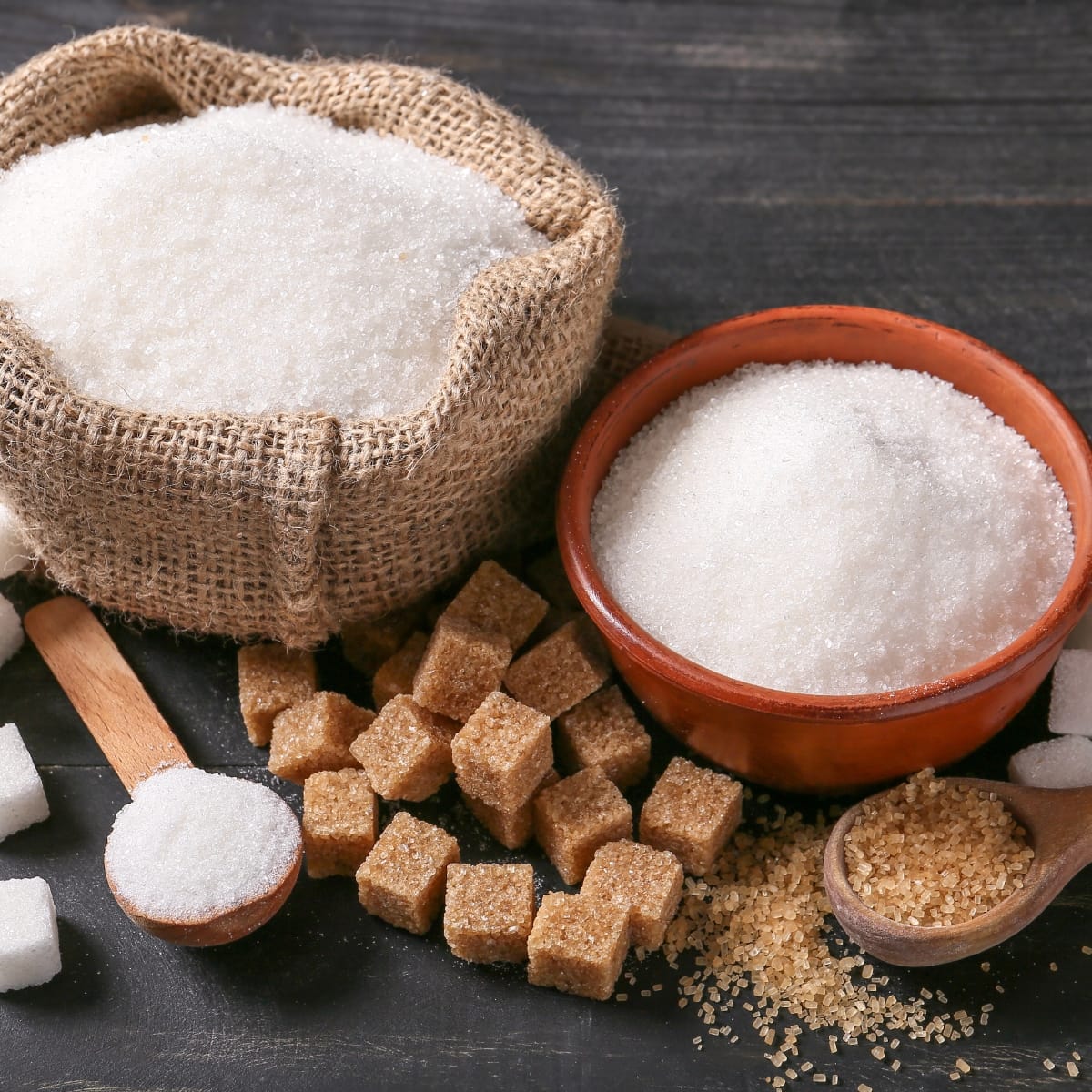

Sometimes. Beet sugar, certified organic sugar, and unrefined sugars are vegan. Some refined cane sugar is decolourized using bone char — charred cattle bone — which never appears on the label.
Here’s how to tell which you have.
Why bone char is used
Refined cane sugar starts brown. Turning it white requires decolourization, and one of the filtration media used for that is bone char.
The bone char doesn’t end up in the sugar — it’s a filter, not an ingredient. That’s why no sugar package mentions it. Under Canadian labelling rules, substances used during processing that aren’t present in the finished product in a functional amount generally don’t need to be declared.
Plenty of refineries use plant-derived activated carbon, ion exchange, or lime purification instead. Those produce sugar with no animal-sourcing question at all.
Two sugars processed differently look and label identically on shelf.
Which sugars are always safe
Beet sugar. Sugar from sugar beet doesn’t go through cane decolourization. No bone char.
Certified organic sugar. Most organic standards prohibit bone char filtration, which makes organic certification a reliable shortcut here.
Unrefined and minimally refined sugars. Turbinado, demerara, muscovado, and sucanat aren’t decolourized to begin with.
Coconut sugar, maple syrup, agave, date sugar. Different production entirely.
Which sugars need checking
Refined white cane sugar, icing sugar, and brown sugar made by adding molasses back to refined white — plus anything containing them, which is most packaged sweet food.
Why you can’t just look it up
Search for whether a specific brand is bone-char-free and you’ll find confident answers that contradict each other.
There are real reasons for that. Refineries change practices, and articles don’t update. One company can run several refineries using different processes, so a brand-level answer may not exist. And nobody is obligated to disclose, so public statements are voluntary and inconsistently maintained.
At least one Canadian vegan organization has publicly declined to certify domestic sugar on the grounds that it couldn’t independently verify producer claims — not because the claims were false, but because verifying them is genuinely difficult.
So treat the “vegan sugar brands” lists circulating online with some caution. Several are years out of date, and a few get basic facts about which companies refine cane versus beet backwards.
What to do instead
Buy organic or beet sugar if you want certainty without effort.
Look for a vegan certification mark on packaged products. It means someone asked the question on your behalf — including for the sugar inside.
Contact the manufacturer if it matters to you for a specific product. Ask about the decolourization method, not just whether the sugar is vegan.
Is brown sugar vegan?
Usually the same answer as white, because most commercial brown sugar is refined white sugar with molasses added back. If the white sugar was bone-char filtered, the brown sugar carries the same question.
Unrefined brown sugars — muscovado, for instance — don’t.
Is icing sugar vegan?
Same question as the white sugar it’s made from, with one addition: icing sugar contains an anti-caking agent, usually cornstarch. That’s typically fine, but worth a glance.
This is one of several ingredients where the label doesn’t tell you what you need to know. We’ve written about the ingredients that never make it onto your label and what a certification mark actually verifies.


Leave a Reply