
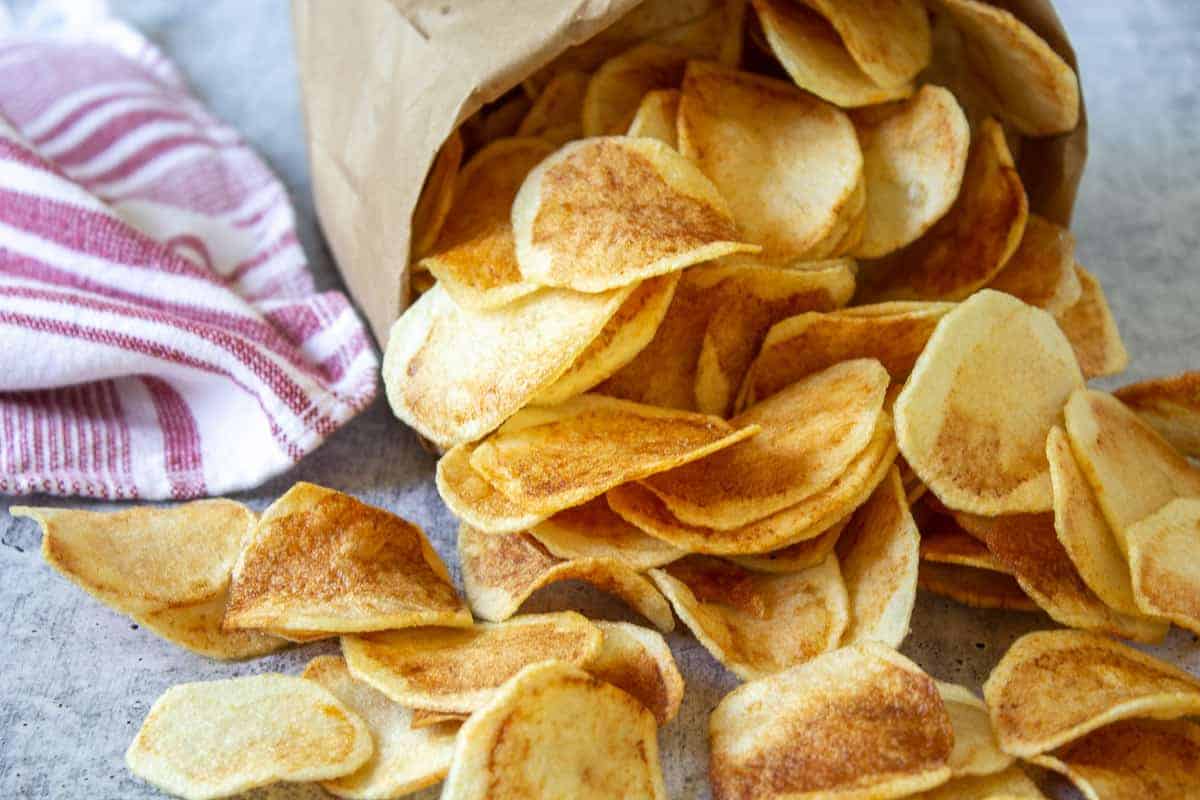

Plain salted chips are usually vegan. Flavoured chips frequently aren’t — including flavours with no dairy association at all, because whey and milk powder are used as seasoning carriers rather than as flavours.
Why dairy is in barbecue chips
Seasoning on a chip isn’t just flavour. It’s a powder blend that has to stick to the surface, distribute evenly, and carry the flavour compounds.
Whey, lactose and milk powder are cheap, neutral-tasting, and good at all three. So they turn up as carriers and bulking agents in seasonings that have nothing to do with dairy.
That’s why barbecue, salt and vinegar, ketchup, and all-dressed chips often contain milk derivatives. Not for taste — for function.
The flavours to check
Obviously dairy: sour cream and onion, cheese, ranch, cheddar.
Not obviously dairy, but often: barbecue, salt and vinegar, ketchup, all-dressed, dill pickle, sweet chili, onion.
Potentially meat-derived: chicken, beef, and bacon flavours. These are sometimes synthetic or plant-derived and sometimes genuinely meat-extract based. The label won’t distinguish unless it declares the meat.
Usually safe: plain, lightly salted, sea salt.
How to actually check
The good news: milk must be declared as an allergen on Canadian labels. So the allergen statement catches the main issue immediately, even when the ingredient list is a dense seasoning blend.
Check the “Contains” line first. If it says milk, you’re done.
The harder cases are where no allergen is triggered:
Natural flavour. A legal category, not a sourcing statement. The flavour itself, or its carrier, can be animal-derived without triggering an allergen declaration.
Meat extracts and fats in meat-flavoured products — these aren’t allergens, so they only appear in the ingredient list.
Enzymes used in production.
The frying oil question
Most commercial chips are fried in vegetable oil — sunflower, canola, corn, palm.
Two things worth knowing:
Shared fryers. A facility producing both vegan and meat-flavoured snacks may use the same fryer. Oil isn’t cleaned between runs the way equipment is; it’s changed. A product made on a shared fryer without a changeover may carry trace transfer with nothing on the label to indicate it.
Animal fats. Beef tallow was historically used in commercial frying and still appears in some operations, though it’s uncommon in mainstream packaged chips now.
Neither is declarable, which makes this the part careful label reading can’t resolve.
Other snacks
Popcorn. Plain and salted usually fine. Butter and cheese flavours obviously not. “Movie theatre butter” flavourings are often dairy-derived.
Pretzels. Usually vegan. Check for butter, cheese, and honey in coated varieties.
Crackers. Frequently contain milk, butter, or cheese. Also watch for L-cysteine as a dough conditioner.
Extruded snacks — puffs, rings, straws. Very likely to contain whey or cheese powder.
Corn chips and tortilla chips. Plain versions usually fine. Flavoured versions, same questions as potato chips.
The short version
Read the allergen line, not the flavour name. Barbecue is a dairy question; sour cream and onion is an obvious one.
For shared fryers and flavour carriers, a certification mark is doing work a label can’t.
VegeCert is a non-profit certification program for vegan and vegetarian food, supplement and personal care products. Our prohibited ingredients list sets out exactly what each mark permits.



Leave a Reply