
When manufacturers call us about certification, one question comes up before almost any other: “We don’t have a dedicated vegan facility. Are we already disqualified?”
Almost always, the answer is no.
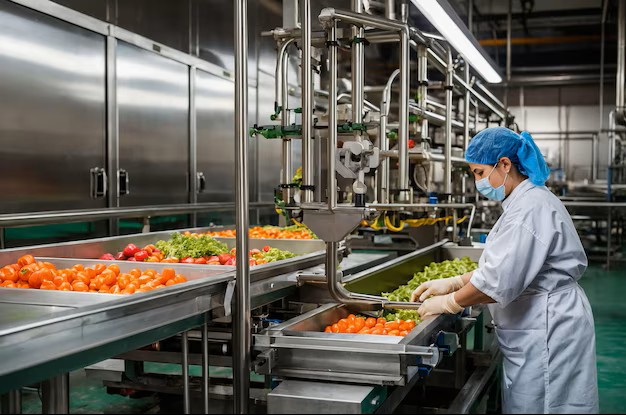
The assumption behind the question is that Certified Vegan means a plant that has never run an animal product. Very few facilities in North America could meet that bar, and a standard written that way would certify almost nothing. What certification actually assesses is narrower and more practical: what goes into the product, and what controls stand between your vegan run and everything else the line touches.
Here is how that line gets drawn — what disqualifies a product, and what doesn’t.
The problem shared lines actually create
Back in 2012, when VegeCert was founded, our Managing Director put it plainly in an interview: a bag of regular potato chips could carry residue from the pork rinds that ran on the same machinery earlier that day. Nothing on the ingredient panel would tell a shopper that.
That is the real risk. Not the existence of shared equipment, but the absence of anything sitting between one run and the next.
Which is why the questions our inspectors ask are almost never “do you share the line?” They are “what happens on that line between products, and how do you know it worked?”
What does not disqualify a product
Shared equipment on its own. Mixers, fillers, ovens, conveyors, and packaging lines that also run dairy or egg products are common and workable, provided a changeover procedure exists and is documented.
Non-vegan products elsewhere in the plant. A facility that makes a butter-based product on line 2 can still certify a product on line 1.
Non-vegan ingredients in your warehouse. Storage of animal-derived ingredients for other SKUs is a segregation question, not an automatic disqualification.
What does disqualify a product
An animal-derived ingredient in the formula. The obvious one, but it catches more products than you’d expect, because it includes ingredients that never appear on the panel.
An animal-derived processing aid. Filtering agents, clarifiers, defoamers, release agents, and enzymes. Isinglass in beverages, bone-char-filtered sugar, animal-sourced glycerine, certain mono- and diglycerides. These do the same work as ingredients but disclose none of it, which is exactly why third-party review exists.
No changeover procedure at all. If a vegan product runs directly behind a dairy or meat product with no cleaning step in between, there is nothing to assess.
A cleaning procedure that nobody can produce evidence of. Verbal assurance that the line “gets washed down” is not a control. Written sanitation SOPs, changeover logs, and a defined sequence are.
Uncontrolled rework. This is the one most often missed. A plant with excellent line-cleaning discipline can still fold non-vegan rework or carryover product back into a vegan batch because the rework stream itself was never segregated. Rework is a formulation input. It gets reviewed like one.
Ingredient substitutions made without notice. Certification covers a specific formulation from specific suppliers. A procurement change to a cheaper glycerine or a different enzyme supplier can quietly break the certification if it isn’t disclosed.
The grey areas worth flagging early
A few situations aren’t automatic yes or no, and they move faster if you raise them in your application rather than waiting for the inspector to find them:
- Shared fryer oil between vegan and animal-protein products
- Dry blending and dust carryover in facilities running milk or egg powders
- Shared bulk tankers or transfer lines for liquids
- Co-packers you don’t directly control, where the sanitation records belong to someone else
- Seasonal or campaign production where the changeover happens once and then the line runs for weeks
None of these are disqualifying in themselves. All of them need documentation.
What to have ready
If you want a fast review, assemble these before you apply:
- Full ingredient and sub-ingredient breakdown, including processing aids
- Supplier declarations for anything ambiguous — glycerine, enzymes, sugar, natural flavours, mono- and diglycerides
- Your sanitation SOP for the relevant line
- Changeover and production sequencing records
- Your rework policy, in writing
- Facility layout showing where vegan and non-vegan production sit relative to each other
Manufacturers who send this package up front are the ones who clear our review in about five business days. Manufacturers who send an ingredient list alone usually spend two weeks going back and forth on the same six questions.
The short version
Shared lines are normal. Undocumented shared lines are the problem.
Certification isn’t asking you to rebuild your plant. It’s asking you to prove that the product in the bag matches the claim on the bag — and that a real inspector, not your marketing team, verified it.
Not sure whether your setup qualifies? Tell us what you make and how you make it. We’ll tell you exactly what it would take to get certified — before you commit to anything.



[…] provided sanitation and changeover are documented and verified. We wrote about that in detail in our post on cross-contamination. A shared line is a documentation question, not an automatic […]
[…] Related: What actually disqualifies a product from vegan certification […]
[…] Our standard permits shared equipment. What it requires is documented cleaning between runs and allergen testing confirming residue below the 5 ppm threshold. A single line producing both vegan and non-vegan products can be certified. We wrote about how that assessment works in our post on cross-contamination. […]
[…] Related reading: why “vegan” isn’t a regulated term in Canada and what actually disqualifies a product. […]