
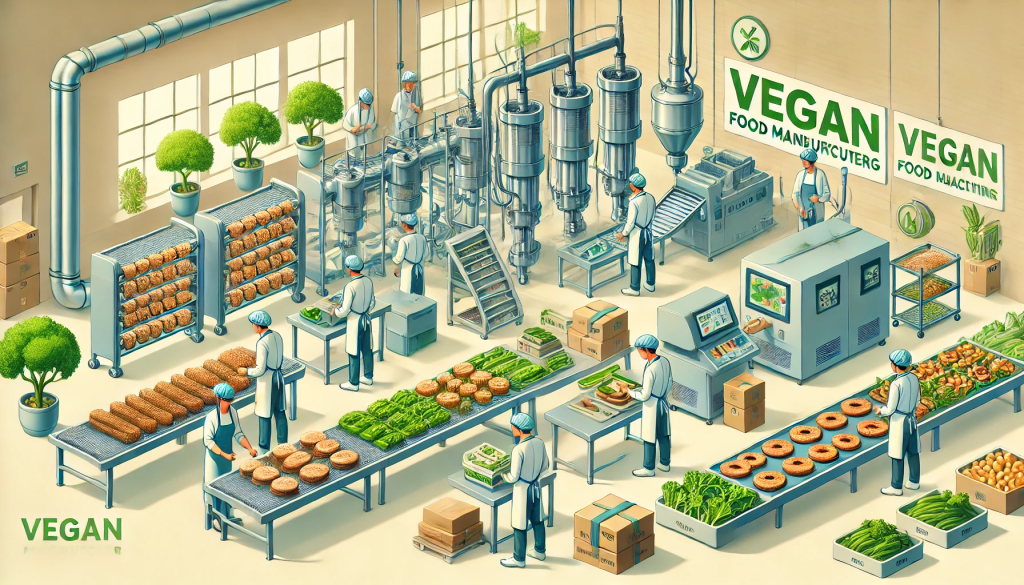

Manufacturers often approach vegan certification expecting a substantial new program. New documentation, new procedures, new testing regime.
For most of the companies we work with, that isn’t what happens. If you already run a food safety program with allergen controls, you’ve built the majority of what we need. The certification review is largely a matter of pointing existing systems at a different question.
What carries over
Supplier documentation. Allergen management already requires you to know what’s in your inputs and to hold declarations from suppliers. That’s the same infrastructure we need for sourcing verification — the question changes from “does this contain milk” to “is this glycerine plant-derived,” but the process and relationships are identical.
Sanitation and changeover validation. If you’ve validated cleaning between allergen-containing and allergen-free runs, you’ve already built the procedure we assess for shared equipment. Our requirement is that machinery be thoroughly cleaned between runs, with allergen testing confirming 5 parts per million or fewer of non-vegan residue before a run qualifies. Manufacturers with existing allergen testing regimes usually meet this without changing anything.
Traceability and lot control. Required under any GFSI-recognized scheme. We use the same records.
Rework policy. You already have one. We just need to see it.
What doesn’t carry over
Three things food safety programs don’t cover, because they’re not safety questions:
Processing aids. Fining agents, filtration media, enzymes, release agents. These are frequently exempt from ingredient declaration and rarely tracked by allergen programs, because most of them aren’t allergens. They’re the most common reason a certification review takes longer than expected.
Carriers and diluents. The glycerine behind a flavour, the lactose fixing a seasoning. Allergen programs catch the lactose. They don’t catch the glycerine.
Ambiguous-source ingredients. Stearates, mono- and diglycerides, some vitamins. Identical names, different origins, no allergen implication either way.
That’s the actual gap. It’s narrower than most manufacturers expect.
What a mature program looks like
Sweets from the Earth is a useful example of the ceiling here.
The Toronto bakery started in 2002 as a one-person operation and has grown into a multi-facility business selling to grocery, natural food, foodservice, airlines, schools, and restaurants across Canada. They run two FSSC 22000 facilities — one dairy, egg, sesame, peanut and tree nut free, the other dedicated to dairy, egg, wheat and gluten free production. The gluten-free facility is Canadian Celiac Association certified, with suppliers audited for gluten status and each batch of their custom flour blend tested.
That’s an unusually thorough setup, and it points at something worth saying clearly: they didn’t build any of that for vegan certification. They built it for allergen management and celiac safety. The vegan certification sits on top of infrastructure that already existed.
They also hold kosher and halal certification alongside vegan. Four marks, one underlying quality system.
You don’t need dedicated facilities
Worth stating plainly, because the example above could give the wrong impression.
Running separate facilities is the most robust approach available, and very few manufacturers can justify the capital. It is not what we require.
Our standard permits shared equipment. What it requires is documented cleaning between runs and allergen testing confirming residue below the 5 ppm threshold. A single line producing both vegan and non-vegan products can be certified. We wrote about how that assessment works in our post on cross-contamination.
The manufacturers who struggle aren’t the ones with shared lines. They’re the ones who can’t document what happens on them.
Where certifications stack
Sweets from the Earth carrying kosher, halal, and vegan marks together isn’t unusual, and it’s worth understanding why the combination works.
Each mark answers a different question. Kosher and halal address religious dietary law, with requirements around sourcing, supervision, and equipment status that don’t map onto vegan requirements. A kosher pareve product contains no meat or dairy — but it may contain eggs, honey, or fish-derived ingredients, none of which are acceptable under our vegan standard. Our published standards list exactly where the lines sit.
For a manufacturer, the practical benefit is that the underlying work overlaps substantially. The supplier documentation, facility records, and ingredient breakdowns collected for one certification serve the others. Pursuing them together is meaningfully less work than pursuing them sequentially.
What to do if you’re already certified for something else
- Pull your existing supplier declarations. Most will already cover what we need, or need only a follow-up question about sourcing.
- Identify your processing aids specifically. This is the genuine gap. Fining agents, enzymes, release agents, filtration media.
- Locate your carrier and diluent documentation for flavours, colours, and premixes. If you don’t have it, ask now — supplier response times are the longest part of the process.
- Send us your existing food safety documentation with your application. It saves a round trip.
Manufacturers who arrive with a mature program and their processing aid documentation in hand tend to move through review quickly. The ones who take months are almost always waiting on a supplier three tiers up.
Already certified for HACCP, kosher, halal, or organic? Send us what you have and we’ll tell you what’s missing. No cost, no commitment.



Leave a Reply