
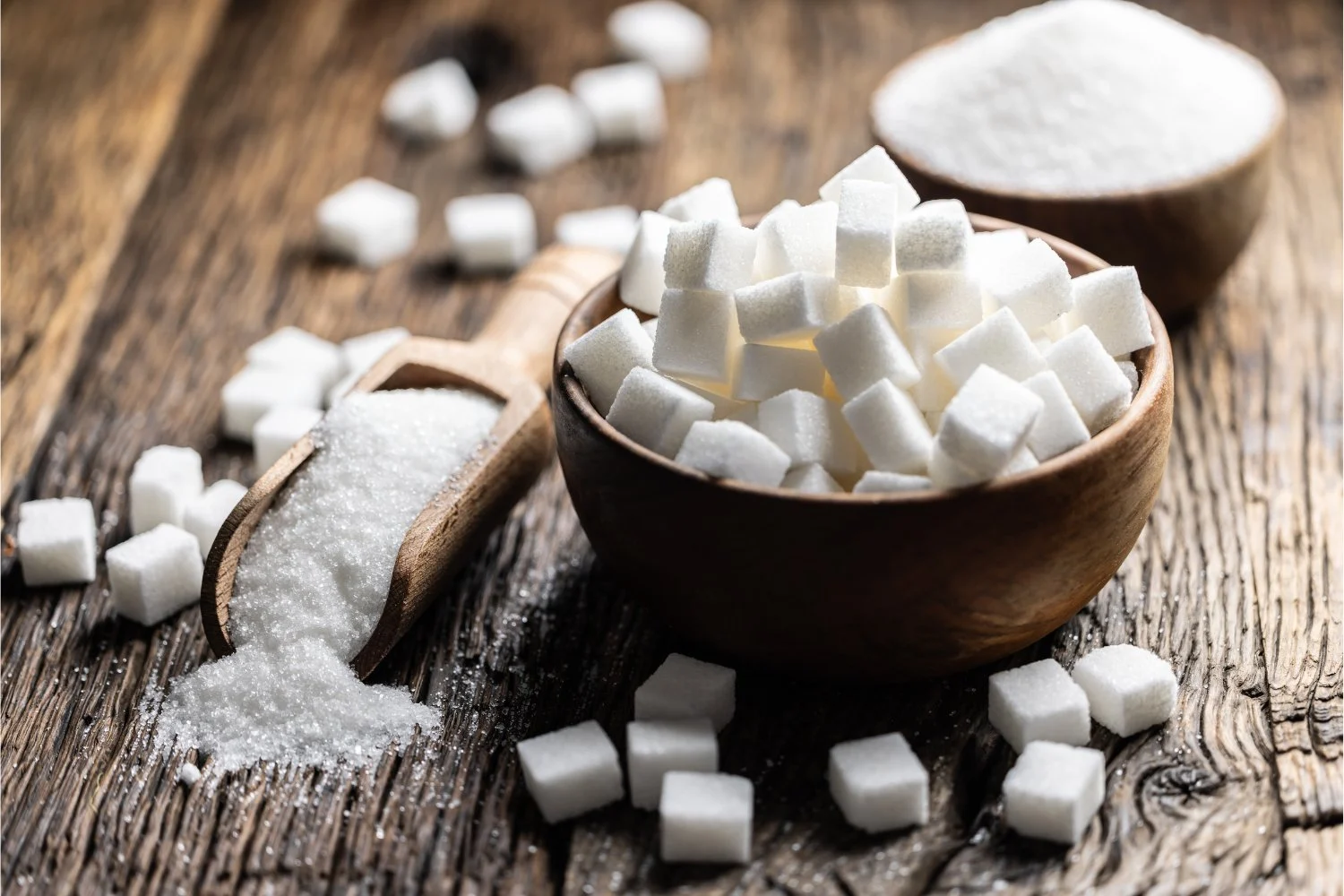

Sugar is the clearest example of the problem this blog keeps returning to: an animal-derived material used in production, absent from the finished product, and therefore absent from the label.
It’s also the example where the publicly available information is least reliable — which is worth understanding in itself.
What bone char does
Refined cane sugar starts brown. Getting it white requires decolourization, and one of the filtration media used for that is bone char: charred cattle bone, sometimes described as natural carbon.
The bone char doesn’t end up in the sugar. It’s a filter. Under Canadian labelling rules, substances used in processing that aren’t present in the finished product in a functional amount generally don’t need to be declared — so no sugar package anywhere says anything about it.
Alternative decolourization methods exist and are widely used: granular activated carbon from plant sources, ion-exchange systems, and lime purification. A refinery using those produces sugar that raises no animal-sourcing question at all.
Two sugars processed differently arrive on shelf looking and labelling identically.
What is reliably bone-char-free
A few categories don’t require investigation:
Beet sugar. Sugar from sugar beet doesn’t go through the cane decolourization process, and bone char isn’t used.
Certified organic sugar. Most organic standards prohibit bone char filtration, which makes organic certification a reliable proxy in this specific case.
Unrefined and minimally refined sugars. Turbinado, demerara, muscovado, sucanat, and similar products aren’t decolourized to begin with.
Everything else needs verification.
Why you can’t settle this by searching
Here’s the part worth being honest about.
Search for whether a given Canadian sugar is bone-char-free and you’ll find confident answers. You’ll also find that they contradict each other, that several are years out of date, and that some describe which refineries process cane versus beet incorrectly.
There are good reasons for the confusion:
Refineries change practices. A refinery that used bone char five years ago may not now. Articles don’t update.
One company can operate multiple refineries with different processes, so a brand-level answer may not exist.
Nobody is obligated to disclose, so public statements are voluntary and inconsistently maintained.
Verification is genuinely difficult. At least one Canadian vegan organization has publicly declined to certify domestic sugar on the basis that it could not independently verify producer claims — not because the claims were false, but because verifying them is hard.
For a shopper, this is unresolvable at the shelf. For a manufacturer, it’s unresolvable by research. The only reliable answer comes from the supplier, in writing, for the specific product and refinery you’re buying from.
Why it matters more than it seems
Sugar isn’t a minor ingredient in most formulations. It’s frequently the first or second on the panel.
And it concentrates. Icing sugar, fondant, coating systems, syrups, and sweetened beverages all multiply the input. A bakery or beverage producer buying refined cane sugar in volume has more exposure to this question than to almost any other single ingredient.
It also travels. If you buy a sweetened compound ingredient — a coating, a syrup, a flavour base — the sugar in it came from somewhere you haven’t asked about.
What we require
For certification, we need confirmation of sugar sourcing where refined cane sugar is a meaningful input. In practice that means one of:
- Confirmation the sugar is beet-derived
- Confirmation the sugar is certified organic
- A written statement from the supplier confirming the decolourization method for the specific product supplied
- Confirmation the product is unrefined
The third option is the one most manufacturers end up needing, and it’s usually straightforward to obtain — suppliers are asked this regularly now. What takes time is when the sugar arrives inside a compound ingredient, and the question has to travel two tiers up.
What to do
If you’re a manufacturer: request sugar sourcing confirmation in writing, specifying the refinery where possible. Do it before you apply. If you buy sweetened compound ingredients, ask about those separately — the answer for your bulk sugar doesn’t cover them.
If you’re a shopper: a vegan certification mark means someone has asked this question on your behalf. Absent that, organic and beet-derived are the reliable shortcuts. Internet lists of “vegan sugar brands” are worth treating with caution — several of the most widely shared ones contain errors or have gone stale.
Sugar a significant input in your formulation? We’ll tell you exactly what documentation would satisfy the question.


Leave a Reply