
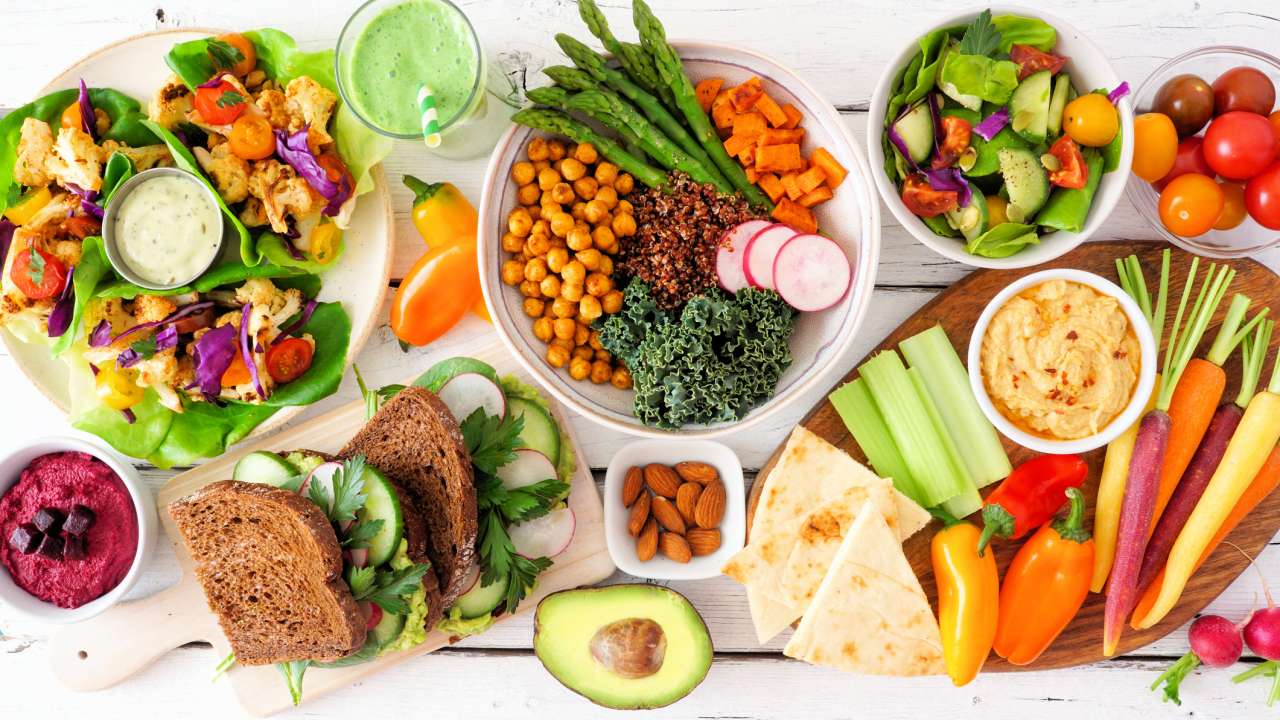

Vegan means no animal-derived material of any kind. Vegetarian permits products animals produce — dairy, eggs — but not animals themselves. Plant-based is a marketing term with no fixed meaning, and plant-based products sometimes contain animal ingredients.
None of the three has a legal definition in Canadian food labelling, which is why the difference matters more than it should.
Vegan
No animal-derived material at all.
The part people miss: that includes ingredients that never appear on the label. Processing aids — fining agents used to clarify beverages, filtration media, enzymes, release agents — are generally exempt from declaration because they aren’t in the finished product in a functional amount. A juice clarified with gelatin contains no measurable gelatin, and isn’t vegan.
Under our standard, vegan also excludes honey, beeswax, carmine, and shellac.
Vegetarian
No animals. Products animals produce are generally permitted.
The common misunderstanding is that vegetarian simply means “no meat.” It doesn’t. Standard vegetarian definitions — including ours — still exclude:
- Gelatin, from animal collagen
- Animal rennet, from calf stomach lining
- Fish and fish derivatives, including isinglass and fish gelatin
- Carmine, from insects
- Tallow, lard, and slaughter by-products
Our vegetarian designation follows our vegan standard with four permitted exceptions: dairy, eggs, bee products and shellac.
In practice, a lot of food marketed as vegetarian contains gelatin or animal rennet, because “vegetarian” is undefined and manufacturers apply their own interpretations.
Plant-based
Not a regulatory term. Not a synonym for vegan.
Plant-based generally describes what a product is made mostly from, not what it excludes. Products marketed as plant-based have been found to contain:
- Dairy, as whey or casein — including in some plant-based cheeses, where casein provides stretch
- Honey
- Fish-derived ingredients in sauce components
- Egg
“Meat-free” has the same problem. It’s a claim about one category of ingredient, not about animal products generally.
Why none of this is regulated
Canada has no federal standard defining “vegan” or “vegetarian” on a food label. Neither does the EU or the UK.
Contrast that with “organic,” which has a federal standard, an accreditation system, and a required certifying body.
What applies instead is the general prohibition on misleading claims. That catches outright falsehoods. It doesn’t create a shared definition, which is why two products carrying the same word can differ substantially.
The other terms
Pescatarian — vegetarian plus fish.
Flexitarian — mostly plant-based, not a dietary restriction.
Ovo-vegetarian — eggs but not dairy. Lacto-vegetarian — dairy but not eggs.
Pareve — a kosher classification meaning neither meat nor dairy. It permits eggs, honey, and fish, so it isn’t a vegan indicator.
Cruelty-free — about animal testing, not ingredients. A cruelty-free product can contain beeswax or lanolin.
What to actually rely on
For most products, reading the panel catches the named animal ingredients, and that’s enough.
For beverages, refined sugar, supplements, and heavily formulated products, the label genuinely can’t tell you — the information isn’t required to be there.
That’s the gap a certification mark closes. It means someone independent verified the ingredients, the sub-ingredients, and the processing aids against a published standard rather than an internal interpretation.
VegeCert is a non-profit certification program for vegan and vegetarian food, supplement and personal care products. Our prohibited ingredients list sets out exactly what each mark permits.
COR, the Kashruth Council of Canada, is one of the world’s largest kosher certification agencies, certifying thousands of products, restaurants, and facilities. Learn more at cor.ca, or read about our certification services at corkosher.com.



Leave a Reply