
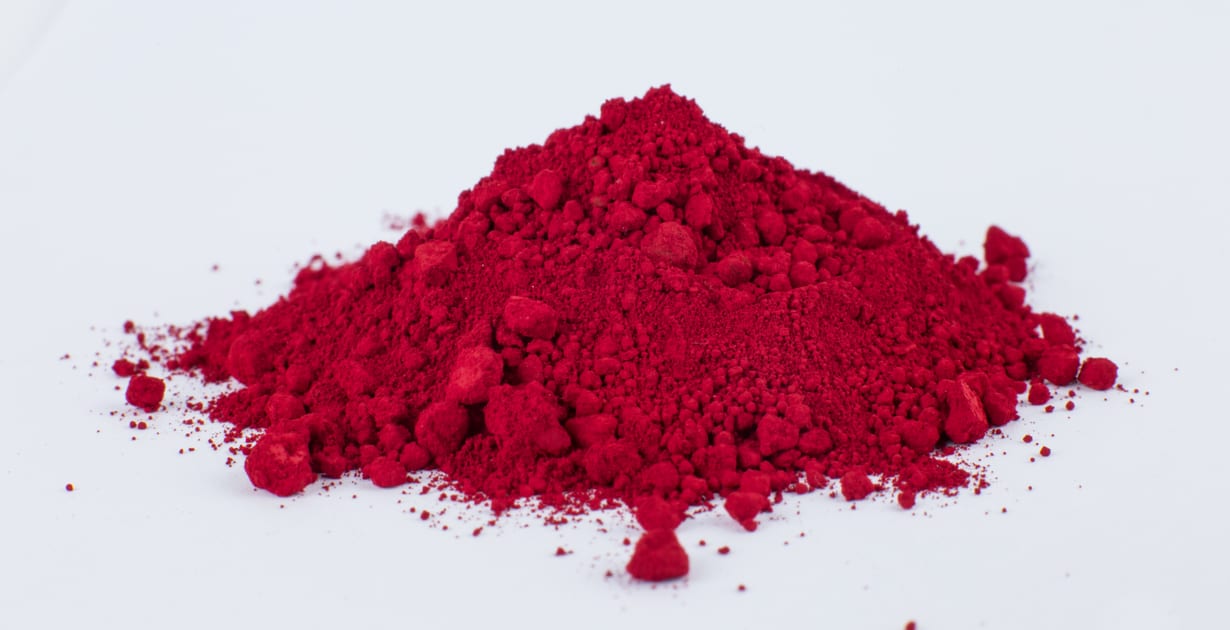

Carmine is a red colouring made from cochineal scale insects. It’s neither vegan nor vegetarian. In Canada it must be declared by name on the ingredient list, which makes it one of the few animal-derived ingredients you can reliably catch by reading the label.
What it’s made from
Cochineal are small scale insects — Dactylopius coccus — that live on prickly pear cactus, primarily in Peru and the Canary Islands.
The insects are harvested, dried, and processed to extract carminic acid, which produces a deep, stable red. It takes a very large number of insects to produce a small quantity of dye, which is part of why it’s relatively expensive.
There’s no plant version. Carmine is insect-derived by definition.
What it’s called on labels
This is the part worth memorizing, because it appears under several names:
- Carmine
- Carminic acid
- Cochineal
- Cochineal extract
- Natural Red 4
- C.I. 75470 — its Colour Index number in Canadian regulations
- E120 — the European designation
- Crimson lake
In cosmetics you’ll most often see CI 75470 or carmine.
Canada requires it to be named
Canadian labelling rules changed here, and in the consumer’s favour.
Food colours must now be declared by their specific common names in the ingredient list of a prepackaged product. The blanket term “colour” is no longer permitted, and individual colour names can’t be grouped inside parentheses after it.
So a Canadian food label that contains carmine has to say so. That’s unusual — most of the animal-derived ingredients we write about never reach the label at all.
The United States has a similar requirement. The FDA has mandated declaration by name since January 2011, a rule prompted by reports of severe allergic reactions, including anaphylaxis, to foods and cosmetics containing carmine.
Where it appears
Food:
- Yogurts and dairy desserts, particularly strawberry and raspberry
- Fruit juices and drinks
- Candy, especially red and pink coatings
- Ice cream and sorbet
- Surimi and imitation crab
- Some sausages and cured meats
- Baked goods and icings
- Some alcoholic beverages, notably certain aperitifs
Cosmetics:
- Lipstick and lip gloss
- Blush
- Eyeshadow
- Nail polish
Cosmetics are where it’s most common, because carmine is stable, vivid, and doesn’t have the regulatory complications of some synthetic reds.
Is carmine vegetarian?
No, under most definitions including ours. It requires harvesting and processing the insects.
This surprises people who assume vegetarian standards only exclude mammals, birds and fish. Our vegetarian designation permits dairy, eggs, bee products and shellac — carmine isn’t among the exceptions, so it’s prohibited under both our marks.
Why it’s still used
Carmine is genuinely good at its job. It’s more light- and heat-stable than most plant-derived reds, produces a truer red than beet juice, and counts as a “natural” colour at a time when manufacturers are moving away from synthetic dyes.
That last point means carmine use has in some cases increased as brands reformulate away from artificial colours — a reformulation that reads as cleaner on the label can be a step backwards for vegan consumers.
Alternatives
- Beetroot juice or betanin — most common substitute, less heat-stable
- Anthocyanins from purple carrot, red cabbage, or berries
- Lycopene from tomato
- Paprika extract for orange-reds
- Synthetic reds such as Allura Red, which are vegan but artificial
The allergy note
Carmine can cause allergic reactions in some people, occasionally severe. That’s the reason both Canadian and US regulators require it to be named rather than hidden behind a generic colour declaration.
If you’ve had an unexplained reaction to a red food or cosmetic, it’s worth checking the label for these names.
The short version
Insect-derived, not vegan, not vegetarian, and — unusually — always declared on Canadian labels. Learn the eight names above and you can catch it every time.
VegeCert is a non-profit certification program for vegan and vegetarian food, supplement and personal care products. Our prohibited ingredients list sets out what each mark permits.



Leave a Reply