
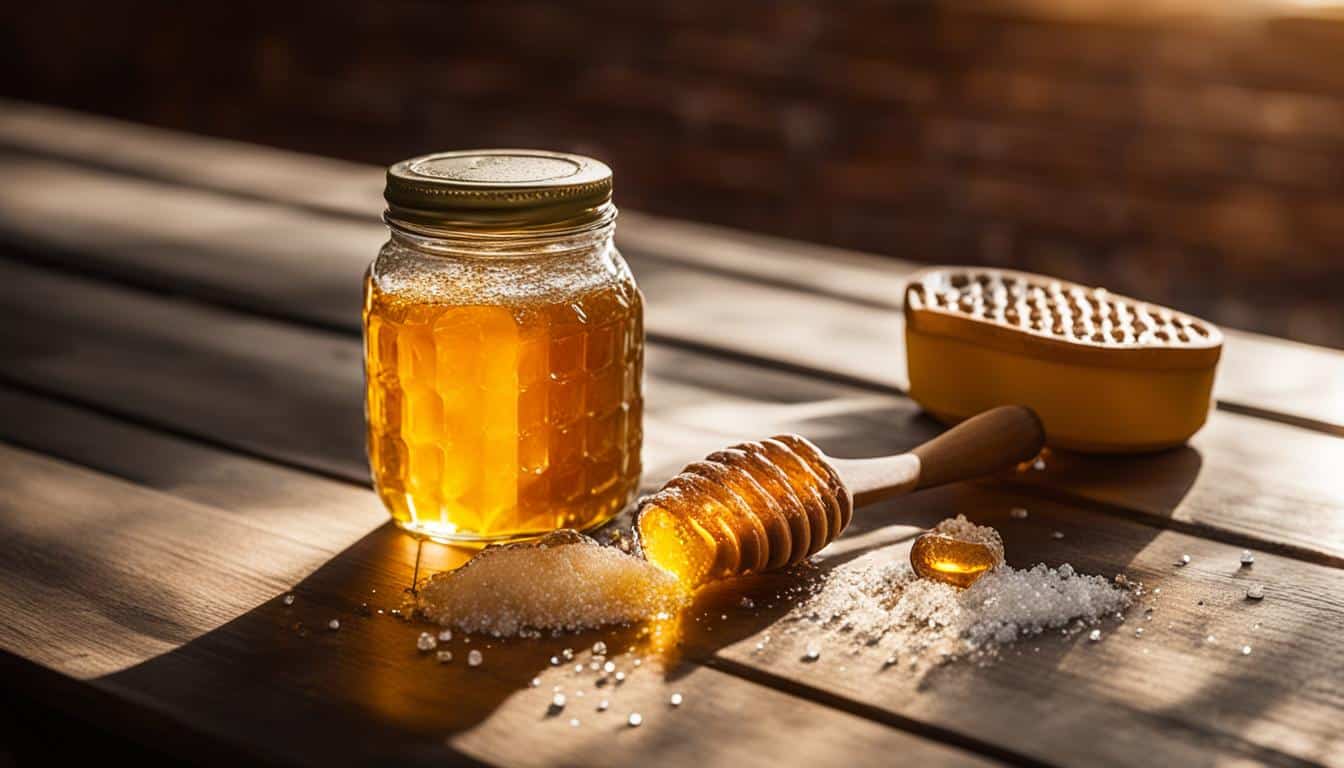

No. Honey is produced by bees, which makes it an animal product under every standard vegan definition — including ours. It is, however, vegetarian.
That split is the useful thing to understand, because it applies to beeswax, propolis, royal jelly and bee pollen too.
Why it’s excluded
Vegan definitions turn on whether something is animal-derived, not on how the animal was treated. Honey is made by bees from nectar, for bees. Harvesting it takes a product an animal made.
That’s the whole argument, and it’s why honey is excluded by essentially every vegan standard regardless of how the hive was managed.
The debate, briefly
There’s a real disagreement among people who avoid animal products, and it’s worth representing fairly rather than dismissing.
Some argue that small-scale beekeeping is materially different from industrial animal agriculture, that managed hives support pollination that agriculture depends on, and that the harm involved is minimal or absent. People who find that persuasive sometimes describe themselves as vegan and eat honey.
Others point to commercial practices — queen replacement, wing clipping, feeding sugar syrup in place of harvested honey, colony losses during transport — and to the underlying principle that using an animal’s product is the thing being avoided, not the conditions.
Certification standards don’t adjudicate this. They apply a definition. Ours prohibits honey under the vegan mark and permits it under the vegetarian one, which is set out in our published standards. A consumer who reaches a different personal conclusion is free to, but a certification mark has to mean one specific thing to be useful.
Other bee products
Same treatment — not vegan, and permitted under our vegetarian designation:
Beeswax. Very common. Food glazing agent, candles, lip balm, cosmetics, and as a coating on some fruit and candy.
Propolis. In supplements and some throat products.
Royal jelly. Supplements and premium skincare.
Bee pollen. Supplements and health food.
Where honey hides
More places than people expect, often in savoury products:
- Barbecue sauce, marinades and glazes
- Salad dressings, particularly honey mustard
- Breakfast cereals and granola — including some that don’t say honey in the name
- Breads and baked goods, as a sweetener and for crust colour
- Cough syrups, lozenges and throat products
- Some beers — honey beers and braggots
- Roasted and glazed nuts
- Some yogurts and smoothies
- Cosmetics and skincare
Honey is always declared when it’s an ingredient, so the label will tell you. The issue is that people scan for obvious animal products and skip past it.
Alternatives
Maple syrup. Closest in application for most uses, though the flavour differs.
Agave nectar. Similar viscosity and sweetness, neutral flavour.
Date syrup. Richer, works well in baking.
Brown rice syrup. Mild, less sweet, good for texture.
Golden syrup. Widely available, similar behaviour in baking.
Plant-based “honey” made from apples or other fruit is now commercially produced and formulated specifically to mimic honey’s behaviour.
For beeswax in cosmetics, candelilla wax and carnauba wax are the standard plant substitutes.
Is honey vegetarian?
Yes, under most definitions including ours. Vegetarian standards generally exclude animals that were killed, not products animals produce — which is why dairy and eggs are also permitted.
Our vegetarian mark permits dairy, eggs, bee products and shellac, and prohibits everything else on the vegan list.
The short version
Not vegan, is vegetarian, appears in a lot of savoury products, and is always on the label when it’s an ingredient. Unlike most of the ingredients we write about, this one you genuinely can catch by reading.
VegeCert is a non-profit certification program for vegan and vegetarian food, supplement and personal care products. Our prohibited ingredients list sets out exactly what each mark permits.


Leave a Reply