
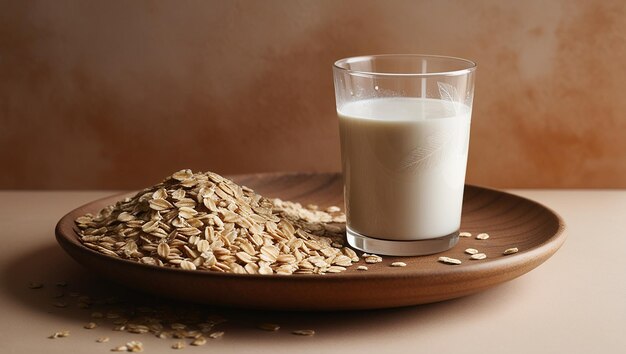

A fortified oat milk is about as plant-based as a product gets. Oats, water, oil, salt, added vitamins.
And the added vitamins are where it can come apart. Vitamin D3, one of the most common fortificants in plant milks, is most often derived from lanolin — extracted from sheep’s wool. Lanolin appears on our prohibited ingredients list, and our vegetarian designation permits only dairy, egg, bee products and shellac as exceptions, so lanolin-derived D3 doesn’t qualify under either mark.
Lichen-derived D3 exists and a number of producers use it. But the label says “vitamin D3” either way.
That’s the shape of the problem across this whole category. Beverages are heavily processed, lightly declared, and the animal-derived risks sit almost entirely outside the ingredient panel.
What solving it looks like
Natura Foods, the Saint-Hyacinthe producer we certify, is a useful worked example — because if you read their published ingredient lists, the fortification blend specifies vitamin D2 rather than D3.
D2 is ergocalciferol, and it’s plant-derived. It sidesteps the lanolin question entirely rather than requiring a supplier letter to resolve it.
That’s a formulation decision, made upstream, that removes a whole category of ambiguity from the product. It isn’t the only valid answer — lichen-derived D3 works too — but it illustrates the general principle: the cheapest time to solve a sourcing question is before the formulation is locked, not during a certification review.
Natura has been at this a while. The company began in 1992 as Nutrisoya, producing organic tofu in Saint-Hyacinthe before launching what became one of Canada’s first soy beverages, then expanded into rice, almond, and oat over the following decades. In 2020 they became the first Canadian producer of certified organic, gluten-free oat beverages, made with oats grown on the Canadian prairies.
Their soy formulations are also worth reading as an example of a short input list: an organic soy base, organic cane sugar, organic canola oil, sea salt, xanthan gum, organic natural flavour, and a vitamin and mineral blend. Fewer inputs means fewer supplier relationships to document — one of the quieter advantages of a clean formulation when it comes time to certify.
Fining and clarifying agents
The largest issue, and the one almost no shopper knows about.
Clear liquids don’t start clear. Producers use fining agents to bind haze-forming compounds and drop them out of suspension. Several traditional ones are animal-derived:
- Isinglass — from fish swim bladders. Traditional in cask ale and some wines.
- Gelatin — used across wine, juice, cider, and vinegar.
- Casein — a milk protein, used in white wine.
- Egg albumin — used in red wine.
- Chitosan — commonly from shellfish, though fungal-derived versions exist.
Plant-based and mineral alternatives are well established: bentonite clay, pea protein, silica gel, PVPP, and plant-derived activated carbon. Many producers have already switched.
The problem isn’t availability. It’s that fining agents are removed before packaging and therefore generally don’t need to be declared under Canadian labelling rules. Two beers on the same shelf, one fined with isinglass and one with bentonite, carry identical labels.
Fortification
Beyond D3, worth checking:
Omega-3 fortification. Fish oil or algal. Increasingly common in plant milks and juices.
Vitamin A. Some forms use carriers or stabilizers worth confirming.
Calcium sources. Usually mineral, but confirm the carrier in the premix.
The premix itself. Fortification blends are rarely a single ingredient. They contain carriers, flow agents, and stabilizers — commonly glycerine, sometimes lactose. The declared ingredient is “vitamin D3” or “vitamin blend.” The carrier is invisible.
Filtration
Activated carbon can be bone-derived or plant-derived. Both are used in beverage filtration.
Bone char is also used in refining some cane sugar, which matters for any sweetened beverage. Practice varies significantly by refinery and by country, and beet sugar doesn’t use it. If sugar is a meaningful input, this needs a supplier letter rather than an assumption.
Category-specific things to check
Beer and cider. Fining agents. Also lactose in milk stouts and some sours, and honey in certain styles.
Wine. Fining agents across the board. Also worth noting that wine and grape products carry separate kosher requirements entirely unrelated to animal content, if you’re pursuing both marks.
Juice. Gelatin clarification is common. Also carmine in red and pink juices.
Kombucha and fermented drinks. Honey as a substrate or sweetener. Some cultures are dairy-derived. Lactic acid, depending on production route.
Protein beverages. Whey and casein are obvious. Less obvious: the flavour carriers, the stabilizer blends, and the sweetener systems.
Plant milks. Fortification, as above — check the D source specifically. Also check stabilizers and emulsifiers: mono- and diglycerides are common and can be plant- or animal-derived. Gums like xanthan and gellan are typically fermentation-derived, but the fermentation substrate is worth confirming.
Soft drinks. Carmine in red varieties. Sugar refining. Glycerine in some flavour systems.
Why this category needs certification more than most
For most food products, careful label reading catches the majority of animal-derived ingredients. Beverages are the clearest exception.
The fining agent isn’t on the label because it isn’t in the finished product. The carrier behind the fortificant isn’t on the label because it’s part of a declared ingredient. The filtration medium never appears anywhere. A shopper doing everything right, reading every word, still can’t tell.
That gap is the specific reason third-party verification exists — and it’s why a beverage carrying a vegan mark is communicating something a beverage without one genuinely cannot.
What to gather before applying
- Written confirmation of fining and clarifying agents from whoever performs that step — often a contract facility rather than you
- Full breakdown of any fortification premix, including carriers
- D3 source specifically — lanolin or lichen
- Filtration media confirmation
- Sugar sourcing, if sweetened
- Flavour and colour carrier documentation
The first item is the one that most often sits with someone other than your direct supplier. Start it early.
Make beverages? Send us your formulation and we’ll tell you what we’d need to verify it. No cost, no commitment.



Leave a Reply