
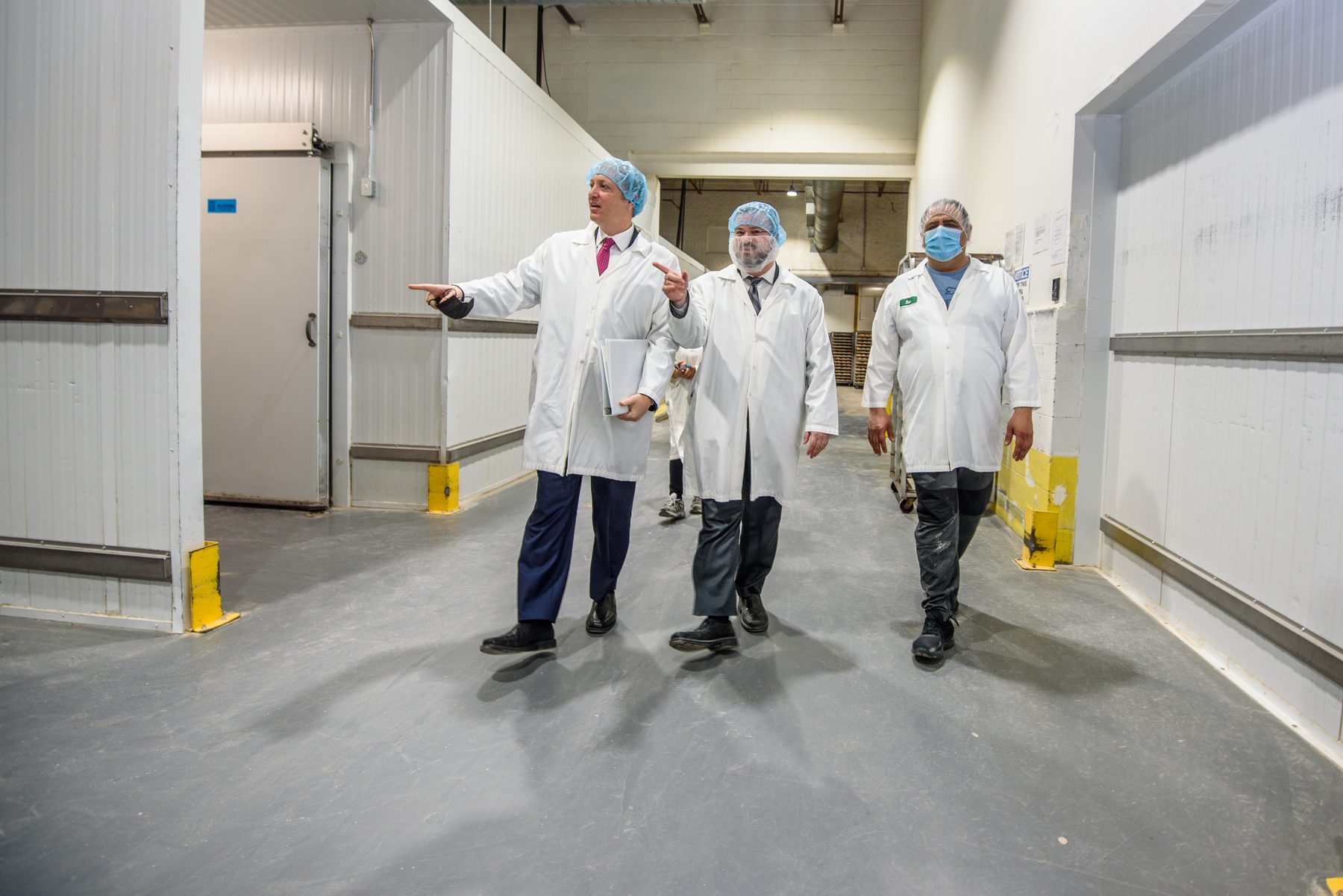

Facility inspection is the part of certification manufacturers are most uneasy about and know least about.
Some of that is because certifiers don’t publish it. Some is because “inspection” and “audit” carry associations from food safety work that don’t entirely transfer.
Here’s what the process actually involves.
Why we inspect at all
Not every vegan certifier does. Some review a submitted ingredient list annually and issue a mark on that basis. It’s a legitimate approach and it catches the obvious problems.
We inspect in person because the gap between documentation and practice is where products actually fail. A formulation can be entirely compliant on paper while the line it runs on tells a different story — a release agent nobody listed, a rework stream nobody documented, a changeover procedure that exists as a document but not as a habit.
Richard Rabkin, our Managing Director, made the point when VegeCert launched: what distinguishes real-time facility inspection from annual ingredient-list review is that one of them can see what’s happening.
Before the visit
[RICHARD / ELANA: confirm the actual pre-visit sequence — what documentation is requested, how far in advance, and who from the facility needs to be available.]
Broadly, expect to have submitted:
- Full formulations for every product seeking certification
- Sub-ingredient breakdowns and supplier declarations
- A facility and equipment overview, including what else runs on shared lines
- Sanitation and changeover procedures
- Allergen testing protocols and recent results, if you share equipment
- Rework policy
The more complete this is before the visit, the shorter the visit tends to be.
On the day
The inspection covers three things: the physical facility, the records, and the match between them.
The facility. Production areas, storage, and the lines your certified products run on. What we’re looking at is the environment your product moves through — what shares space with it, what shares equipment with it, and where animal-derived materials are present in the building at all.
Storage and receiving matter more than people expect. Segregation of raw materials, labelling of incoming goods, and what sits next to what are all part of the picture.
Records. Batch records, cleaning logs, allergen test results, supplier documentation. We’re checking that the procedures described in your documentation are the procedures being followed and recorded.
Conversation with production staff. Not a test. The people running the line know things that don’t appear in any document — what actually happens at changeover, what gets reworked and where it goes, what the release agent situation is. This is usually the most informative part of the visit.
[RICHARD: how long does a typical inspection take? Is it announced or unannounced? Annual, or another cadence?]
What we’re not doing
Worth stating, because the anxiety is usually misplaced.
It isn’t a food safety audit. We’re not assessing your HACCP plan, your pest control, or your temperature logs, except where they bear on the vegan question.
It isn’t adversarial. We’re not trying to fail you. A finding we identify before the mark goes on your packaging costs you a correction. The same finding discovered after costs considerably more.
It isn’t a surprise inquisition. You’ll know what we’re looking at. Most of it you’ll have already documented.
What we commonly find
The recurring issues, roughly in order:
Undocumented release agents. Pan greases and sprays that nobody thought of as an ingredient.
Rework streams. Product reworked back into a batch, where the rework’s own composition wasn’t tracked.
Processing aids nobody listed. Filtration media, fining agents, anti-foam, enzymes — the things covered in our post on processing aids.
Changeover procedures that exist on paper. A documented cleaning procedure that production staff describe differently.
Supplier documentation gaps for compound ingredients, especially flavours and premixes.
None of these are unusual, and most are correctable without reformulation.
After the visit
[RICHARD: what’s the actual post-inspection sequence — written report, timeline for findings, how corrections are closed out, and how this connects to the five-day review turnaround advertised on the site?]
How to prepare
Have your documentation assembled, not scattered. The single biggest determinant of a smooth inspection.
Have someone available who knows the floor. A quality manager who can answer document questions is necessary. Someone who can answer “what actually happens at changeover” is more useful.
Walk your own line first. Ask yourself what touches the product that isn’t on a formulation sheet. Release agents, filter media, rework, shared utensils. That exercise finds most of what we’d find.
Don’t tidy up for the visit. We’re assessing normal operation. A facility presented in an unusual state tells us less, not more, and the discrepancy is usually visible in the records anyway.
Want to know what an inspection would involve for your facility? Tell us what you produce and we’ll walk you through it.



Leave a Reply